

Gratis ongkir min. Rp500.000Belanja sekarang
Watch any espresso being pulled and your eyes immediately go to the crema—that rich, golden layer sitting on top of the cup. For years, thick crema has been treated as the hallmark of a great espresso. But here's the surprising part: crema is often the least enjoyable part of the drink. That's not to say crema is "bad." It plays an important role in espresso and tells you something about the brewing process. But if your goal is the best possible flavor, separating or removing the crema can noticeably improve the tasting experience.
Crema is a foam made from microscopic carbon dioxide bubbles, coffee oils, and dissolved coffee compounds. During roasting, coffee beans trap CO₂ inside their structure. When espresso is brewed under pressure, much of that gas dissolves into the water. As the espresso exits the portafilter, the pressure suddenly drops and the gas escapes, creating millions of tiny bubbles. Those bubbles are stabilized by coffee oils, forming the golden foam we know as crema. Fresh coffee and darker roasts generally produce more crema because they contain more available CO₂.
Crema doesn't taste like the liquid espresso underneath. Its foamy structure changes how flavors are delivered to your palate. Bitterness is often emphasized, while sweetness and clarity become less noticeable. Taste the crema by itself with a spoon, and you'll likely find it dry, bitter, and lingering compared to the espresso below. This is one reason many professional tasters stir espresso before evaluating it. Mixing the crema back into the liquid creates a more uniform cup and reduces the harshness of drinking a concentrated layer of foam first. The same idea also helps explain why some people don't enjoy Americanos. In a traditional Americano, the crema floats to the top and is often the first thing you taste. Because crema tends to accentuate bitterness, that first sip can be harsher than the coffee underneath. While roast level, extraction, and dilution all influence the final flavor, reducing or removing the crema can make an Americano taste noticeably smoother and sweeter.
Stirring makes the espresso more consistent—but it doesn't remove the bitterness contributed by the crema. It simply distributes it throughout the drink. A crema separator takes a different approach. Instead of mixing the foam into the espresso, it removes most of the crema before the coffee reaches your cup. The result is an espresso that many people perceive as: 1. Sweeter 2. Cleaner 3. More transparent 4. Less bitter 5. Easier to distinguish origin and roast characteristics This is especially noticeable with lighter roasted coffees, where subtle acidity and delicate aromatics can be masked by the bitterness of a thick crema.
Not universally. Some people enjoy the traditional texture and appearance of crema. Others prefer the cleaner presentation and flavor of espresso with little or no crema. Rather than changing the extraction itself, a crema separator changes what ends up in your cup. The espresso underneath is the same—the separator simply reduces the amount of foam you drink. Think of it as another way to tailor the drinking experience, much like choosing a different cup shape or serving temperature.
Crema has become one of espresso's defining visual features, but appearance and flavor aren't always the same thing. If you've never tried espresso with most of the crema removed, it can be a surprisingly different experience. The cup often feels sweeter, cleaner, and allows the coffee itself to take center stage. For coffees with delicate floral notes, bright acidity, or layered sweetness, removing the crema may let those characteristics shine more clearly than ever.
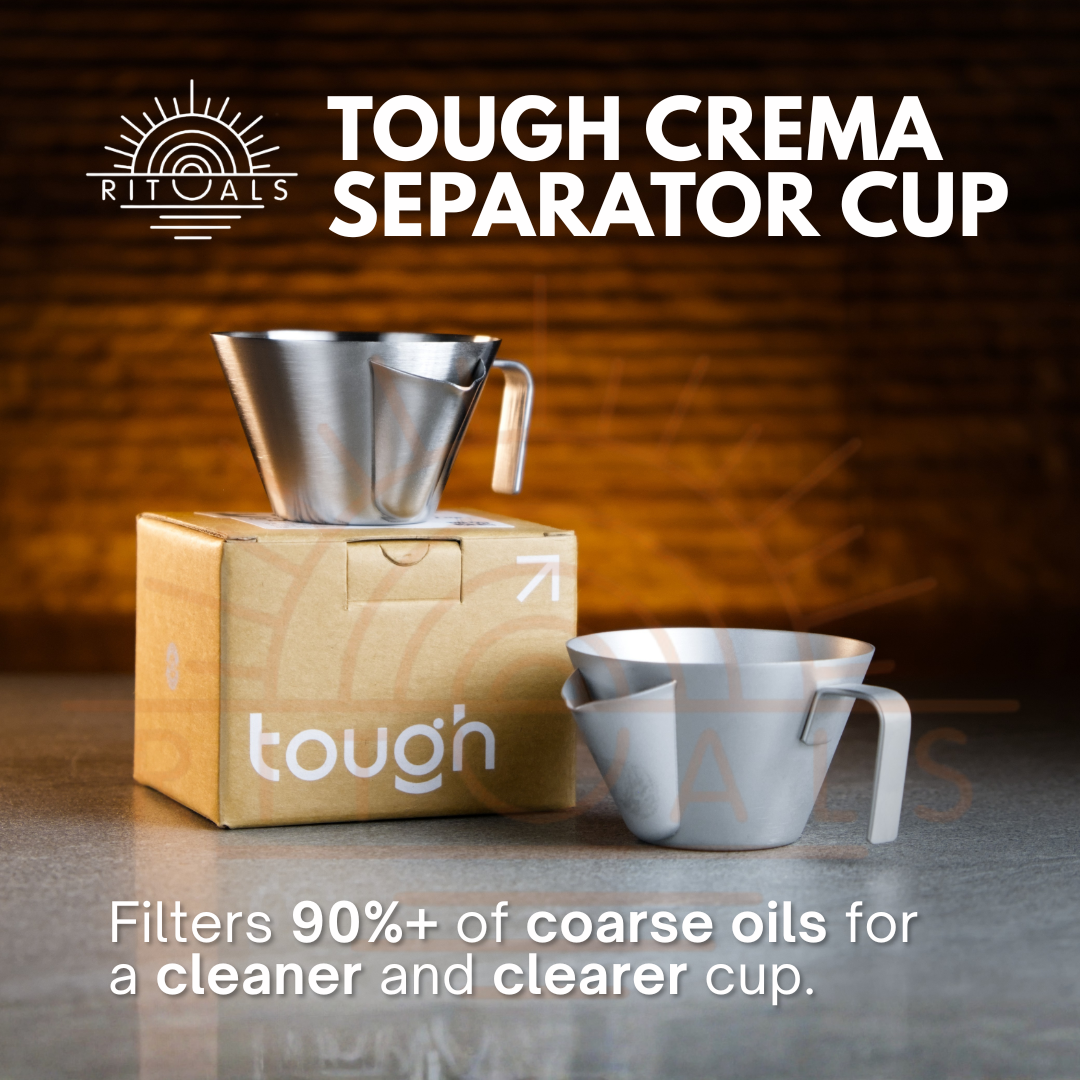
Tough Espresso Crema Separator Cup (100ml)